Wednesday, November 10, 2010

Native Extension Mount Blade

HOME OF FRANCOPHONE WRITERS (continued) Receptions

The 15,16 and 17 October 2010 on the occasion of the 12th Book Fair Breuil (71), city of residence of the Centre Francophone de Bourgogne, the Centre, in collaboration with the Office City of Culture of the city, has hosted the Francophone writers have, for the most part, met during the show many students, college students or elementary.

Here is a presentation of these figures:

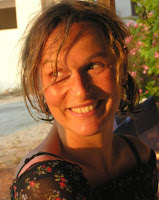
Anne Cuneo, one of the most representative writers of the Suisse Romande, which was good enough to answer our questions.

1) Your saga "Zaida" is a great and beautiful novel. Why this title?
The title was chosen in memory of an aunt of my father, Zaida Cuneo. She was much older than her brother, my grandfather, and in fact could be the great aunt of my father himself. I knew when I was little girl, and a childhood without much affection, warmth, his humor, his way to get to know my level of child and never show the condescension with other adults overwhelmed me (which made me despise them - yes, I was early) were very important to me. I had always promised to give his name to a character, and then it has become when I wanted to write the story of a young girl of the nineteenth century. My great aunt died Zaïda aged 105 or 106 years, and remained lucid and funny to the end. It was just one day off (as Zaida of the novel). Besides that, the fate of the heroine and the woman's real were different, and have in common when they both lived.

2) Why a woman of character and feeling to make us go through the twentieth century?

I did not really choose this character, she chose me. I read for professional reasons a number of romances that were happening in the nineteenth century (for an analysis), and I suddenly asked if I could write a novel so close to us in time. I started, and the rest followed his own. Then I got inspired by diaries, biographies and autobiographies of the time, I documented how I do it for any historical novel. Women who have traveled the century 1860-1960 lived two or three European wars, and their character has been tempered by great misfortunes they have suffered, Zaida could be a woman of character. I discovered during my research, many of these silent heroes that history generally ignores.

3) You are a multifaceted writer (novels, screenplays, radio, TV, etc ...), you write novels, did you choose this type so you can show the various aspects of Switzerland through the under the investigator Mary Machiavelli?

Maria Machiavelli, initially, was the antidote to my work as a journalist. As a news reporter of the TV public service I had to be as objective as possible, and I did not have to give my opinion, I had to provide people something to do theirs. Mary was the channel through which I expressed my feelings about the political and social realities of this country, I show obviously, and on which I can here, to look frankly subjective.
presentation by Anne Cuneo
Anne Cuneo is born in Paris in 1936 to Italian immigrant parents . After the war, she returned with her family in Milan. The death of his father, She spends part of his youth in boarding religious Italy or Switzerland. She ran away to England, learned English and returned to continue his studies in Lausanne, where she obtained a BA in lettres.Touche everything, it will carry multiple jobs: waitress, counselor, receptionist, secretary, translator, teacher, journalist, writer and film director! Then she started writing she would never leave with the success that we know. It covers all topics, and many genres, like detective stories, participate in experiments cinema, radio, theater, passes the staging and the author réalisation.Cette boundless energy remains attentive to the time, feels close to people battered by life and it's not a mystery if the sincerity of his writing draws many readers. A great writer .

Konte Moussa, one of the major writers of contemporary Africa

Three classes of high school Blum ( Le Creusot) met Moussa Konate in the literary café.

For this school year 2010/2011, the school Blum decided to renew the project of literary cafe. Put in place for the third time, his goal is to inspire students to read, to ensure they enjoy opening their books to enrich themselves by reading.
For students involved in the project, 2Bac Pro Elec, 1CAP the Hairdressing and Beauty 2Bac Pro, over 130 books were selected. The principle is that each student, helped by his teachers and two librarians, Séverine Dardalhon and Nathalie Monin, choose a book per quarter and make a small balance at the end of each reading by answering a questionnaire.Mais the interest of literary café, as the name of indicates, moreover, is also set up meetings, organize exchanges around reading. Friday afternoon, in partnership with the Centre Francophone de Bourgogne, the arrival of Moussa Konate was the first highlight of the project. CDI site Lavoisier, students, accompanied by their teachers, Nathalie Cicchetti for 2BP Elec, Catherine Bollery for Hair and CAP Florence Percival 2BP for Aesthetics, spoke with the Malian writer. Two hours during which the author engaged lycéens.D questions where you get your aspiration? How long have you lived in Mali? What is your view on today's Africa? ... Here are some questions posed to the young writer. Questions that gave rise to interesting discussions, for going beyond simple snapshots on Black Africa. That before finishing around the cup of friendship. The SSA, Moussa Konate also will speak Saturday afternoon at the book fair to Breuil. He will lead, from 16.30, a debate on the topic "Africa Black Is Cursed? , Entitled one of his books.

Moussa Konate When talking about the Black African Conference discussion at the Book Fair Breuil (71) Sunday, October 17, 2010
" Black Africa is it cursed , "was the debate that has taken the Malian writer Moussa Konate at the first day book fair.

In a book fair, the fair is the aspect itself with booths set up everywhere, but there is also the aspect rencontres.Ainsi, Saturday afternoon, after Basin Conference by Louis Le Creusot Lagrost, archaeologist and historian known locally, is the author and publisher Mali Moussa Konate, who took part in a debate on Black Africa.
Considered as a reference African writer, he answered questions from Mary Montagne, professor of economics and management The Castle High School in Dijon, and delivered an in-depth, perhaps a bit brief given the importance of the subject on which we could talk for hours but in any case very fair, on the situation of the SSA For him, it appears obvious that the difficulties of the past have left traces, colonization with such perpetuates "the solidarity between the rich" which is still observed today, but he also believes that this vast region Africa has the means to pursue its development. And according to him, it passes by Africans themselves who must break away from a model company still too dominant at present, where the weight, the authority of the community overrides the individual and therefore prevents émancipation.Voilà to summarize the finding which the author arrives Mali in his book "Black Africa Is Cursed ? . To this question he answered so they are not.

Overview Musa Konate
Mali Awards National Book Centre - 1990 and 1999

Of all the writers (contemporary) Mali Moussa Konate seems to be the only one who wants to live with his pen. Indeed, to devote more time to writing, Moussa Konate, then professor of French at school, do not hesitate to abandon the Malian public without claiming any right, after several years of travail.Cette decision was, at the time, considered as pure folly, for no one believed it possible to live as a writer in Mali.

Moussa Konate was first used by an extraordinary will to succeed, which enabled him to overcome many difficulties. It then his love for literature who made the reste.Déjà in 1970, when it passed the bachelor, his first texts were under construction. When he published his first novel, The Price of the Soul in 1981, his mastery of the language of Voltaire no doubt. No idea of what will happen to that text, he continues to write. So that after a decade, no fewer than a dozen titles. Massa Makan Diabaté also when he died in 1988, Moussa Konate is it powered to meet the current literary Mali as the best representative of the literature of his country.
In 1997, Moussa Konate creates Editions Le Figuier, becoming the first writer editor of Mali. Without renouncing his love for French literature, he worked to disseminate knowledge within the rural world through publications in national languages of Mali. He now resides in Limousin, where he created early in 2006 the publishing house "Wintering." He is also co-director of the festival Amazing travelers from Bamako in Mali.
Moussa Konate was awarded the Sony Labou Tansi high school students in 2005 for his play A Night call (Editions Lansman).
His latest book: Is Africa Cursed? is a model of wisdom and reflection.

Tuesday, November 9, 2010

Separate Reception Etiquette

Francophone writers

The 15,16 and 17 October 2010 on the occasion of the 12th FAIR Book of Breuil (71), city of residence of the Centre Francophone de Bourgogne, the Centre, in collaboration with the Municipal Office of the culture of the city, has hosted the Francophone writers have, for the most part, met during the show many high school students, middle school or elementary.

Here is a presentation of these figures:

Questions
Somanos SAR (Cambodia), writer .

1) You lived as a child, the Khmer genocide. Why have published "Apocalypse Khmer", a book of a great truth?
To remember?
To issue a reality too heavy?

I have often noticed that the traumatic memory has a natural tendency to turn into a traumatic memory, which is transmitted from generation to generation. In the end, we suffer without really knowing or understanding why we are in this endless cycle of torment, if not because his parents, grandparents or his great-great-grandparents suffered. In fact, in such cases, the memory becomes a heavy burden, a curse, rather than an asset.

When my kids were born, this realization made me quickly realize that memory forward, as such, involved some risk. Because obviously the memory of the survivor that I am contained poison, that of suffering and hatred. Yet the importance of memory is well established. It is essential for transmission, otherwise send a blank incomprehensible, dangerous, even more difficult to bear for generations to come.

The main objective of Apocalypse Khmer was therefore to provide a memory washed the poison involved. That is to say that memory is primarily an asset, not a duty, to say that the sufferings are mine, and they stop there, on these pages that my children have read them not bear the burden by proxy that this past year as a legacy belongs Intangible their lineage.

The book has been primarily a support, a start key reflections on the meaning that I can give my life, but also to the history of men as a whole.

To go further, read my text, human capital, written for a conference in Phnom Penh in 2008: http://somanos.fr/spip.php?article12 omanos.fr / spip.php? article12 .


2) In a second novel, "Shadow of a Doubt," moving too, your sister one of the 3 million casualties, including filigree figure. Can you tell us why?

Firstly, I am pleased that some readers have been able to find the watermark, indeed. Others have gone completely through, much to my regret, unfortunately !

The shadow of a doubt begins with the dedication, continues with the preface, and ends in the heart of not bringing up the end of his duty to live life. Live because just this exceptional sister wanted it, because she sacrificed herself for her brother has a chance to survive. This is a gift of oneself to the extreme, that few are able to consider.

I could have chosen a more direct style to talk about herself, what she did. But the narrative, I have already, through Apocalypse Khmer. In addition, this style was not enough to express the strength I wanted to give to the memory of my sister, through the character of Stephanie. I wanted to revive it, otherwise, in another context, another life, another country, another culture, but faced the same caprices of fate.

More profound, this book is a logical progression from the first, though not obvious, since it raises the question about the importance that everyone gives to his life. What is most sacred? Life in itself, staying alive, or the sense that one wants to give?

To go further, "another meaning of forgiveness, "an article written for an online newspaper in Cambodia, now defunct, Ka-Set.info. http://somanos.fr/IMG/pdf/ka-set_-_Un_autre_sens_du_pardon.pdf

3 "Thmeng Chey," is the story of a good little devil Cambodian genocide he also threatened heritage culture, to rewrite this story?

foremost, let me return to the term "genocide", the main Khmer Rouge leaders are being tried or are being tried for three counts:
-
War crimes - Crimes against Humanity
- Genocide

All this to emphasize that genocide is only one component of the crimes. Some, who for years have argued loud and the Khmer Rouge, have loved ones hiding behind the only qualification of genocide. It would be so convenient! But the truth is the greatest crime committed has been in the name of ideology. The Khmer Rouge proceeded to the systematic elimination of whole groups of people, not because they were an ethnic group, 95% of Cambodians are Khmer, but mostly because they belonged to social classes considered as harmful: teachers, civil servants, students, soldiers, merchants, etc..

In fact, the Khmer Rouge did not tolerate that three classes: peasants, workers and soldiers, all having to work day and night without rest or respite. Ultimately, it was not a human society, but the ants. So it is understandable that the culture had no place, like all other components of life elsewhere. Work and obey the Party (Angkar) or die.

The result is that after four years of the communist regime in the extreme, Cambodia was left with an incredible leap back. While the Khmer cultural heritage was on the verge of extinction. The literature has lost a lot, since most books were destroyed or burned.

Even some oral traditions, as Thmeng Chey, are dying. The destruction left by the Khmer Rouge imposed in survivors of the first necessity of immediate survival, then the loss of landmarks due to rupture of the chain of transmission of human capital.

Beyond a desire to preserve through oral and written, there is also the desire to share the story of this child Playful with a wider audience than the Cambodians themselves. The world is valid only if it is shared. Thmeng and Chey is a form of sharing.

Portrait of writer Somanos SAR

Somanos Sar was born in Phnom Penh in 1965. He is ten years old when the Khmer Rouge marched triumphantly
on Phnom Penh. His family, by the mere fact of being
city, will be considered by the new regime as ideologically
fatal, like millions of Cambodians who were part of the free world
before the fall of The Khmer Republic, April 17, 1975. In less than four years
, guided by the dogma of communism extreme and totally out of touch,
Democratic Kampuchea will decimate a quarter of the Cambodian population,
a sudden purges, summary executions, collectivization frenzied, of
hard labor. The communist utopia
snatch the life of his father, three sisters and a brother,
more than half of his family. In 1982, Somanos Sar eventually trace its
mother, trapped in Europe during the torment. The latter, naturalized French,
manages to bring to Paris at the age of 17. Upon his arrival, he did not speak a word of French
, but already, the need to "drop" the story of this tragedy is latent
.
After obtaining a postgraduate degree in microelectronics at the University of Paris-Sud, Orsay
in 1992, today Somanos SAR is an engineer, entrepreneur and
also a writer. Beyond its transverse profile, a reflection of his passions
are aviation, writing and running, the concept of human capital is the
common core of his thoughts and actions. Thus, on his blog, http://somanos.fr,
Somanos SAR wrote that memory does not escape, but is upset
see a certain fatalism belief that "history is an eternal recommencement
. This means that errors have not been able to serve
lesson. Therefore, according to him and liked to draw strength and wealth do not pass
hatred and suffering.
This may be accompanied by a special sense of forgiveness is a step toward reconciliation on the bases all understood and accepted.
because fundamentally, humans aspire to do good. Unfortunately this
belief that everyone wants to ardently defend is too often used to justify any
, including killing. So to highlight this contradiction
Somanos SAR believes deeply in life. For him, happiness is a duty
, memory is an asset. Choose the path to happiness, it
take victory for himself, take it to the Khmer Rouge, definitely.
And it is this point of view found in his second book, the shadow of a doubt
, awarded the literary prize Phnom Penh Home 2008, a fiction that
attempts to probe the hearts of those who beings have to survive the irreplaceable. His novel is
victory of life over death, whatever the price. But life
with a capital T, as the obligation to live that is that in good conscience.
is a gay novel, where the word "pain" arises at every turn. It is a novel
tender, but uncompromising.
As the Khmer Rouge in Cambodia, the hero of this story
arise and then disappear. But as long as he remains a person to suffer
their absence, the little world of his characters moving between live and dead, both died from this condition the history of live acts.
But writing is all about sharing, offer readers the inner space
of the author, his life, his experiences.
Corine JAMAR

Corine JAMAR (Brussels), author and screenwriter BD, kindly answer our questions before we meet young nompbreux including younger disabled.


1) You have written books for youth (6 to date), most exhausted, including the famous "elephant memory" (ed. Pepin). Can you tell us how you work your books?

Corine Jamar: It depends. The first, he was (The Princess hidden) of an order. The publisher (Casterman) provided illustrations, and he asked me to invent a story in relation to them. He had asked a writer before I confirmed that, according to him, no one had not left. As I worked ten years as creative in advertising and I was so accustomed to certain constraints, it does me no problems and I really enjoyed this work. The others were invented from a desire, a sudden inspiration or memory. "The little car of Andrew" for example is inspired by a true story my father told me. Except that I changed the memory, the narrative to enact its own laws, that my father has very moderately appreciated! Memory of an elephant "and" Aristide Lafrousse "start from a concept illustrator that I joined and I've written for them, intrude on their world. Like when an idea comes knocking at the door of my imagination but I also work on the basis of an idea that is not mine. There is something "terra incognita" I like ... well

2) Your latest book news "placeholder" tackles the issue of disability. Why?

Corine Jamar: "placeholder" is not a new book. This is a huge mistake from the publisher (even though I love the news). This book is a series of short stories that follow and which depicts a mother and her disabled daughter. The 12th chapter can not be read independently of others: they are not new but rather a new novel by. The choice of this theme was obvious to me. My oldest daughter is disabled. So part of my life with her I tell. I chose to do through this space for the car not to address it head on (and also because, as recounted in the book, cars are parked at this location would not care, which me want to turn this sad reality into something positive, a book, while denouncing the indifference of selfishness people). This is not an autobiography, because many situations are invented and that I changed careers and character names. The humor in this very book was for me a way to defuse things, a way of taking control of a dramatic situation (obviously) that fate has imposed upon us, my daughter, her parents and, of Naturally, the little sister who came later! In my second book "The queen of the feast," a disabled child is present even if the disability is absolutely not the point. It interacts with the main character and justifies some of his actions. It is the daughter of a minor character. In the third I'm finished, it is also present. It became established itself as and when writing, there is no premeditation.

Gay Make Love In Toilet

Animation Francophones


In June 2010, the Centre Francophone de Bourgogne hosted two French artists: Bibata ROAMBA (Burkina Faso) and BAOUZZI Mohamed (Morocco). More than 800 students and hundreds of adults were able to discover the stories of Black Africa and the Maghreb.


Le Creusot: Bibata Roamba visiting schools
On Wednesday, June 23, 2010 @ 1:25:08 p.m.

The storyteller from Burkina Faso came to meet young students from several schools.

Every year, the Centre Francophone de Bourgogne is the initiator of an action rather interesting. Indeed, within the framework of one facet of the city policy of making the Creusot discover foreign cultures and their wealth to promote better living together, the French cultural association with support of course but also Torcy Le Creusot and Community Creusot Montceau, brought in specialists children's literature, ie from storytellers and storytelling in schools to share their stories to younger children.


This year, students have benefited from meaningful encounters. Early this week has seen such Bibata Roamba move from Paris to captivate almost 400 kids. To Victor Hugo, Raymond Rochette and Field Cordet Monday, she concluded his tour on Tuesday, stopping at the nursery and then at The Charmille, telling again and again small imaginary stories on Burkina Faso, its country of origin revealing the specifics of it.
had made a tour Baouzzi Mohamed two weeks ago, has meanwhile focused on the intricacies of Morocco, also close to 400 students at this annual total.Si appeals to kids, to note Finally it also appeals to teaching teams.


Chamill The Director, Yves Desbrosses, has also thanked the Centre Francophone de Bourgogne and its president Claude Thomas for the action taken and no doubt beneficial to youth.

Saturday, November 6, 2010

Length Of Time To Keep Psychiatric Records

Rainy Day